

Introduction
A workplace can be a productive environment, but unexpected emergencies can happen at any time. A minor cut, burn, fall, fracture, fainting incident, or serious medical emergency can occur in an office, factory, warehouse, construction site, school, hospital, hotel, or any other workplace.
In such situations, first aid training can make an important difference.
First aid is the immediate assistance provided to a person who is injured or suddenly becomes ill until appropriate professional medical care is available. The objective is to provide suitable initial assistance, prevent the condition from worsening, and arrange professional medical help when necessary.
For organizations, first aid training in India is an important part of workplace safety and emergency preparedness. Employees who receive appropriate training can respond more confidently and responsibly when an emergency occurs.
At WorkSafe Foundation, we focus on practical first aid awareness and workplace emergency preparedness to help organizations develop a safety-conscious workforce.
What Is First Aid Training?
First aid training teaches employees how to respond appropriately to common injuries and medical emergencies.
A workplace first aid program may introduce employees to:
- Basic emergency response
- CPR awareness
- Cuts and bleeding
- Burns
- Fractures
- Sprains and strains
- Fainting
- Choking
- Basic wound care
- First aid kit awareness
- Emergency communication
- Calling professional medical assistance
- Workplace emergency procedures
The purpose of training is not to turn employees into medical professionals. Instead, it gives them appropriate knowledge and awareness to take sensible initial action within the limits of their training while seeking professional medical assistance.
Why Is First Aid Training Important in the Workplace?
Emergencies rarely happen according to a schedule.
An employee may suddenly collapse during a meeting. A worker may suffer a cut while handling material. Someone may receive a burn, fall down, or experience another medical emergency.
Without basic awareness, employees may panic or take inappropriate actions.
Workplace first aid training helps employees understand how to react calmly and responsibly.
1. Faster Initial Response
In an emergency, the first few moments can be important. Trained employees can recognize that an incident requires immediate attention and know how to activate the workplace emergency response system.
2. Reduces Panic
Training gives employees an opportunity to learn and practice emergency-response concepts before an actual incident occurs.
This can help create greater confidence and reduce confusion.
3. Promotes Workplace Safety Awareness
First aid training reinforces the broader message that employee health and safety are important organizational priorities.
4. Supports Emergency Preparedness
First aid should be part of a broader workplace emergency plan that includes emergency contacts, communication arrangements, trained personnel, first aid supplies, evacuation arrangements, and access to professional medical assistance.
5. Builds a Safety Culture
When employees understand how to respond to emergencies and report incidents, safety becomes a shared responsibility.
First Aid Training for Employees
First aid training for employees should be simple, practical, and relevant to the workplace.
Employees may have different responsibilities depending on their job role. Therefore, organizations should consider their workplace risks when developing training programs.
For example:
- Office employees may need awareness of medical emergencies, falls, burns, choking, and basic emergency response.
- Manufacturing employees may face cuts, burns, machinery-related injuries, or other process-specific hazards.
- Construction employees may require training related to falls, injuries, fractures, and other site-specific risks.
- Warehouse employees may encounter manual-handling injuries, falls, cuts, or other operational hazards.
A workplace risk assessment can help determine which first aid topics should receive greater emphasis.
What Does First Aid Training Cover?
A comprehensive first aid safety training program can include several important areas.
1. Understanding an Emergency
Employees should learn how to recognize an emergency and understand the importance of quickly activating the appropriate emergency response process.
This can include:
- Assessing the situation from a safety perspective
- Protecting themselves from hazards
- Seeking help
- Contacting emergency services where required
- Communicating relevant information
- Following workplace emergency procedures
The first principle should always be to avoid putting the responder in danger.
2. CPR Awareness
CPR is an important emergency-response skill used in specific life-threatening situations.
First aid programs may introduce participants to:
- Recognizing cardiac arrest
- Activating emergency medical services
- CPR awareness
- Chest-compression concepts
- Use and awareness of an AED where available and appropriately trained
Practical CPR training should be delivered by appropriately qualified instructors using suitable training equipment.
3. Handling Cuts and Bleeding
Cuts and bleeding are common workplace injuries, particularly in environments involving tools, machinery, sharp materials, packaging, or handling operations.
Training can help employees understand appropriate initial responses, such as:
- Ensuring personal safety
- Assessing the injury
- Using appropriate protective barriers
- Applying suitable pressure where appropriate
- Getting professional medical assistance for serious injuries
- Reporting the incident according to workplace procedures
Employees should not attempt procedures beyond their level of training.
4. Burns Management
Burns can occur because of hot surfaces, liquids, steam, chemicals, electrical equipment, or other workplace hazards.
First aid awareness can explain:
- Identifying the source of the burn
- Removing the person from danger where safe
- Appropriate immediate first aid
- When professional medical attention is required
- What actions should be avoided
The response should always depend on the type and severity of the injury.
5. Fracture and Injury Awareness
Falls and workplace incidents can result in suspected fractures or other serious injuries.
Training can help employees understand:
- Recognizing potential serious injuries
- Keeping the injured person safe
- Avoiding unnecessary movement
- Seeking professional medical assistance
- Supporting the injured person while waiting for help
Employees should not attempt to diagnose or manipulate suspected fractures.
First Aid Kit Awareness
A first aid kit is an important part of workplace emergency preparedness.
However, simply having a first aid box does not guarantee that employees know how to use it or that its contents are suitable and maintained.
Organizations should establish appropriate arrangements for:
- First aid kit availability
- Suitable contents
- Regular inspection
- Replacement of used or expired items
- Accessibility
- Responsible personnel
- Emergency contact information
WorkSafe Foundation First Aid Training
WorkSafe Foundation’s first aid awareness program highlights essential first aid equipment and practical emergency-response concepts.
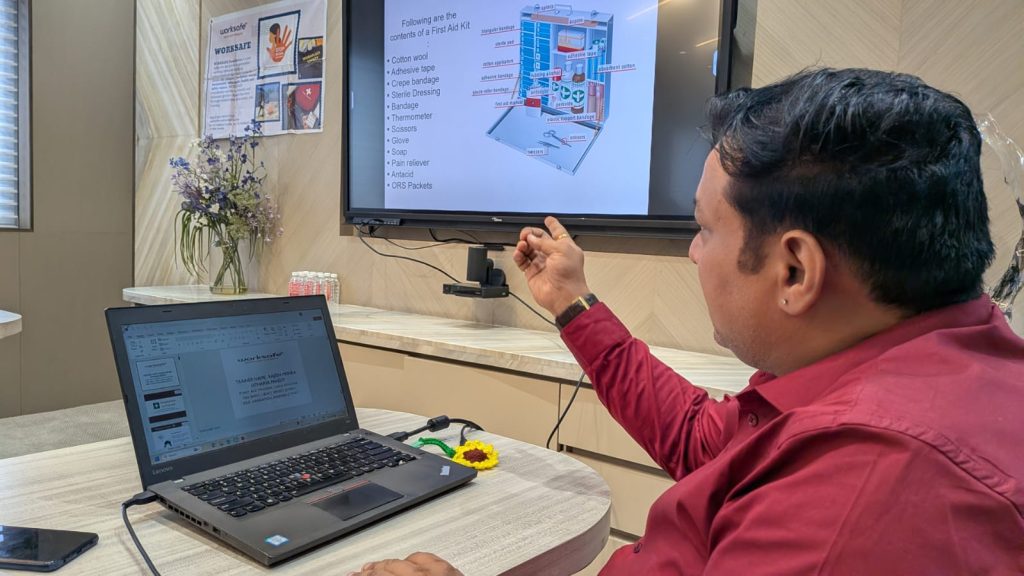 WorkSafe Foundation conducting first aid awareness training with employees and explaining first aid kit contents
First Aid Training Should Be Practical
One of the biggest advantages of practical training is that employees can better understand how emergency-response procedures work.
Instead of relying entirely on theory, training can include:
- Demonstrations
- CPR practice using training equipment
- First aid kit demonstrations
- Emergency scenarios
- Question-and-answer sessions
- Workplace examples
- Group activities
- Visual presentations
- Practical exercises
Practical activities should be conducted under appropriate supervision and according to the trainer’s qualifications and the training objectives.
Corporate First Aid Training
Businesses increasingly recognize that emergency preparedness should be incorporated into employee training programs.
Corporate first aid training can be customized according to the organization’s workplace environment and workforce.
A corporate first aid session may include:
Employee Awareness
Employees learn how to recognize common emergencies and activate the organization’s emergency response process.
First Responders
Organizations may identify suitable employees for more detailed first aid training, depending on their workplace risk assessment and applicable requirements.
Emergency Procedures
Employees learn about emergency contacts, first aid locations, reporting procedures, and other workplace arrangements.
Practical Demonstrations
Training can use realistic workplace examples and practical demonstrations to improve understanding.
First Aid and Workplace Safety Training
First aid training should not operate separately from the organization’s overall safety system.
It can be integrated with workplace safety training covering:
- Hazard identification
- Safe working practices
- Fire safety
- Emergency evacuation
- PPE awareness
- Incident reporting
- Accident prevention
- First aid
- Disaster preparedness
For example, if an organization identifies repeated hand injuries, first aid training can teach appropriate emergency response while safety training should also address why those injuries are occurring and how they can be prevented.
First aid treats the immediate situation; effective safety management focuses on preventing the incident from happening again.
First Aid Awareness Training for Different Industries
Different industries have different workplace risks.
Manufacturing
Training may focus on cuts, burns, machinery-related injuries, emergency response, and workplace-specific hazards.
Construction
Programs can address emergency response awareness related to falls, injuries, fractures, and other construction-site risks.
Offices
Office employees can benefit from awareness related to medical emergencies, falls, choking, burns, and emergency communication.
Warehouses
Training can address common injuries associated with material handling, movement, storage, and workplace operations.
Schools and Educational Institutions
Teachers, administrative staff, and support employees can benefit from appropriate first aid and emergency awareness.
Hotels and Hospitality
Employees may need awareness related to guest emergencies, burns, cuts, falls, and other workplace-specific situations.
The training should always be adapted to the organization’s actual risks.
How to Develop an Effective Workplace First Aid Program
Organizations can follow a structured approach to improve first aid preparedness.
Step 1: Identify Workplace Risks
Understand the types of injuries and emergencies that could reasonably occur.
Step 2: Determine Training Needs
Identify which employees require general awareness and which roles may require more comprehensive first aid training.
Step 3: Establish First Aid Arrangements
Ensure suitable first aid supplies, trained personnel, emergency contacts, and appropriate procedures are available.
Step 4: Conduct Training
Use qualified trainers and practical learning methods appropriate to the training objectives.
Step 5: Communicate Emergency Procedures
Employees should know how to raise an alarm, seek assistance, locate first aid supplies, and contact appropriate emergency services.
Step 6: Review and Improve
Review incidents, near misses, training feedback, and workplace changes to identify opportunities for improvement.
Benefits of First Aid Training in India
Organizations that invest in structured first aid awareness can achieve several benefits.
Improved Emergency Awareness
Employees understand what to do when an emergency occurs.
Better Preparedness
The organization is better prepared to respond to injuries and medical emergencies.
Increased Employee Confidence
Employees may feel more confident knowing that emergency-response training is available.
Stronger Safety Culture
Training demonstrates that workplace health and safety are organizational priorities.
Improved Communication
Employees learn how and when to report incidents and seek assistance.
Support for Safety Compliance
First aid arrangements can form part of an organization’s broader occupational health and safety and emergency preparedness system, subject to applicable requirements.
WorkSafe Foundation – First Aid Training in India
WorkSafe Foundation provides awareness and training programs designed to help organizations develop safer and more prepared workplaces.
Our first aid training focuses on practical awareness and includes topics such as:
- CPR awareness
- Cuts and bleeding
- Burns management
- Fracture support
- First aid kit awareness
- Emergency response
- Workplace safety awareness
- Employee emergency preparedness
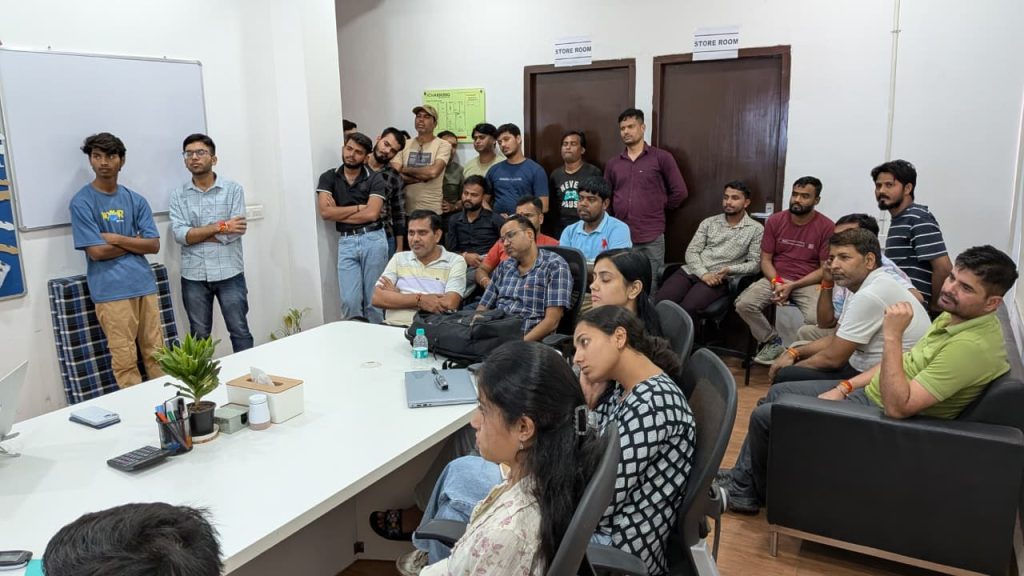
Employees participating in a WorkSafe Foundation awareness and training session.
Be Prepared. Save Lives.
Emergency situations can happen anywhere and at any time.
The right knowledge, appropriate preparation, and timely professional assistance can make a significant difference during an emergency.
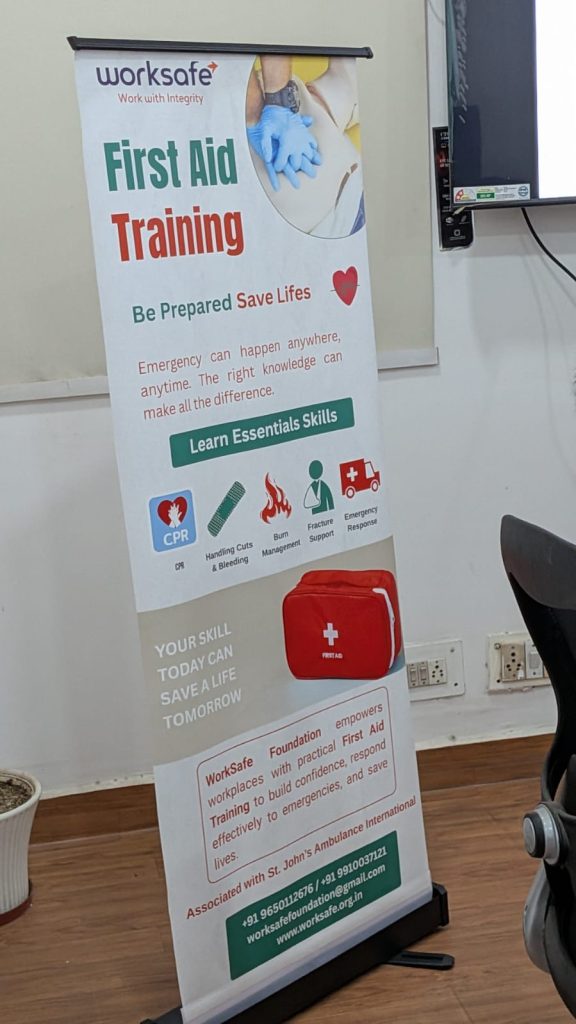
WorkSafe Foundation’s first aid awareness display promoting emergency preparedness and life-saving skills.
Why Choose WorkSafe Foundation?
WorkSafe Foundation believes that “Your skill today can save a life tomorrow.”
Our approach focuses on:
- Practical learning
- Employee participation
- Workplace-specific examples
- First aid awareness
- Emergency preparedness
- Safety culture
- Interactive training
- Awareness and continuous improvement
We work with organizations to develop training programs according to their workplace requirements and objectives.
Conclusion
Every workplace should be prepared for unexpected emergencies.
A first aid kit, emergency contact number, or medical facility nearby is important—but trained and aware employees are also a critical part of emergency preparedness.
First aid training in India can help employees understand how to respond appropriately, communicate during an emergency, and seek professional medical assistance when required.
Whether you operate a corporate office, manufacturing facility, warehouse, educational institution, construction site, hotel, or other organization, consider making first aid awareness an integral part of your workplace safety program.
Train your employees. Prepare your workplace. Build a stronger safety culture.
WorkSafe Foundation
First Aid Training | Workplace Safety | Fire Safety | Disaster Management | POSH Awareness | Workplace Compliance
📧 worksafefoundation@gmail.com
📞 +91 96501 12676 | +91 99100 37121
🌐 www.worksafe.org.in
Call to Action
Looking for First Aid Training in India for your employees?
Contact WorkSafe Foundation today and help your workforce become better prepared for workplace emergencies.